
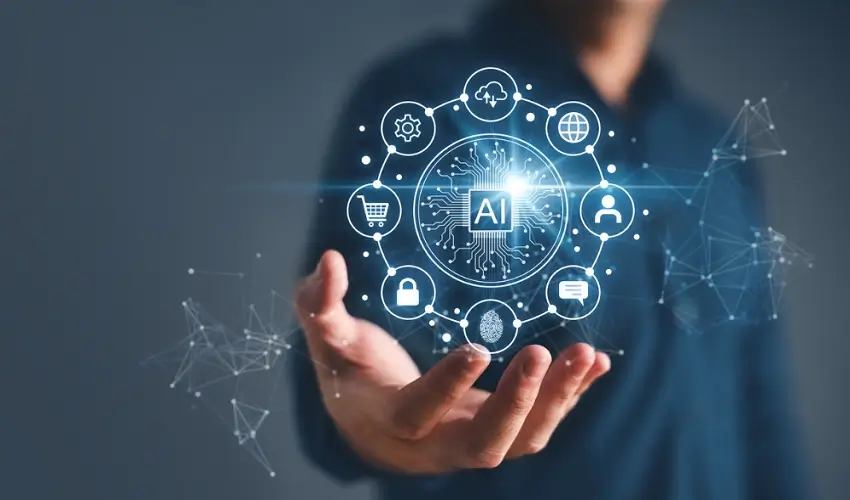
Artificial intelligence has come a long way from being just a theoretical concept in computer science to becoming an everyday reality with its application in the products that we use (in very non-obvious ways) as well as shaping our future industries. Today, AI changes how we access knowledge, how we decide, and how we create value in the digital economy. Smart search engines, recommendation systems customized to our personal preferences based on our usage and browsing preferences, or automated customer service: today, artificial intelligence is an undeniable part of the functioning of digital systems around the globe.
This paper provides a lucid and practical institutional overview of AI. It covers the basics, real-world applications, and its increasing impact on business, marketing, and education. It also serves to demonstrate why AI know-how has become so vital for students and professionals on a digital marketing course within an increasingly data-led age.
Understanding Artificial Intelligence
Artificial intelligence is the theory and development of computer systems able to perform tasks that normally require human intelligence, such as visual perception, speech recognition, decision-making, and translation between languages. Unlike legacy software, which operates within rigid, predetermined parameters, AI systems can learn and improve with feedback and data.
These smart systems operate based on algorithms that learn from huge repositories of data. They can spot patterns and analyze relationships with the processed data, which in turn generates predictions or recommendations. Say, for instance, search engines that use AI to deliver the most pertinent results; e-commerce websites that fall back on it for their product recommendations, or even translation tools that make use of it to interpret and translate linguistic data in no time.
AI isn’t one “technology.” It’s a bunch of subfields—machine learning, natural language processing, computer vision, and predictive analytics. Together, they create the ability for machines to communicate naturally and intelligently with humans.
The Evolution of Artificial Intelligence
The history of AI can be traced back to rule-based systems and the first attempts in machine reasoning decades ago. But these capabilities have only recently become practical, and only because of advances in computing, big data, and cloud technology.
Today’s AI is faster, more scalable, and available to organizations all across the economy. Massive tech infrastructure is no longer required in order to be able to use AI-driven tools—cloud-based services mean they can be deployed a lot more easily and cheaply. This access has driven innovation in areas like healthcare, education, finance, and marketing.
With AI technology now maturing, the need for those who understand how to use it is growing quickly. And that’s precisely why modern teaching programs, including the best digital marketing courses, are now focusing on AI modules to equip students with industry-specific expertise.
Why AI Is So Important for the Digital Economy
AI has been central to the digital economy, enabling efficiency, better decision-making, and more engaging ways for customers to interact. Organizations are now able to process huge amounts of data in real-time, understand insights that matter, and act on market demands quickly.
At a time when consumers want instant, personalized everything, AI empowers businesses to meet these increasingly high expectations through intelligent automation and data-driven tactics. Whether it is predicting what a user will like to see next or when the best moment is to run an advertising campaign, AI enables brands to remain relevant and competitive.
In addition, AI accelerates productivity by taking care of routine or repetitive tasks, thereby liberating time for people to focus on generating fresh ideas as well as working out smarter strategies. It is not about replacing human workers but redefining roles, creating work that is more dynamic and insight-driven.
Use of AI in Digital Marketing
Artificial intelligence has been a huge boon to digital marketing. The AI-enabled solutions today are applied to dissect consumer behavior, customize ad campaigns, and personalize messages as per such preferences through various channels.
Search engines also employ AI to understand the intention behind searches, thereby providing more accurate results. Even in social networks, AI can power content feed curation or tools to programmatically adjust advertising bidding strategies using machine learning. Even email marketing systems have been incorporating AI to personalize subject lines and delivery times for maximum engagement.
These AI tools and methods are crucial for students in a digital marketing course or for most professionals. The ability to work in analytics platforms, automation tools, and AI-driven ad optimization platforms sets marketers apart.
Personalization and Customer Experience
One of the most positive contributions AI has made in the digital age is the delivery of personalized experiences. No longer is it about the same treatment for all users—AI enables businesses to personalize engagement based on how an individual has browsed, what they’ve bought in the past, and their preferences.
Smart recommendation engines, chatbots, and adaptive websites deliver personalized experiences that leave people feeling heard and appreciated. This creates loyalty and trust—two things that matter greatly in business for the long term.
Premier colleges providing digital marketing courses in Delhi focus on personalization, taking cues from souped-up CRM tools, and training students how to ethically use AI capabilities to drive better engagement and customer contentment.
Artificial Intelligence in Content Creation and Strategy
AI is transforming the way that digital content is being authored, disseminated, and optimized. Modern content creators rely on AI-based tools to help them conduct keyword research, spot trends, gauge what audiences prefer, and even draft pieces of their content.
Still, as much as AI can expedite and improve the content creation process, human creativity is second to none. The best digital tactics bring together the accuracy of AI insights with the emotion and originality provided by human writers and marketers.
In structured digital marketing programs, students are taught to regard AI as an assistive tool, a partner who augments creativity, rather than a shortcut that eliminates it.
AI Towards Ethical vs Abusive Use of Artificial Intelligence
As AI becomes more powerful, it also creates ethical dilemmas. On the other hand, concerns regarding data privacy, algorithmic bias, and transparency are gaining importance. Because AI learns from data, the well-known problem of bias and inaccuracy in that data is compounded; it can carry through to unfair results or misinformation.
Responsible AI use requires clearly defined ethical standards, human oversight, and consistent auditing of AI systems to cut down on misuse. Educational institutes, including digital marketing courses in Delhi, are adding an ethics component to their syllabus so that the next breed of professionals can utilize AI responsibly.
Artificial Intelligence and Career Growth
AI has shifted the job market in new ways, generating entirely new roles and redefining some others. Roles like AI analyst, marketing automation specialist, and data strategist are now the most desired. AI tools and analytics are becoming necessary even for traditional advertising roles.
Well-developed industry programmes enable students and professionals to gain practical skills needed in such a changing environment. For anyone thinking about a career in digital marketing, knowing AI is no longer optional—it’s a secret weapon that makes you not only more employable in the short term but also sets you up for long-term growth.
The rest is just continuous learning, because the pace of evolution in AI technologies is rapid. And those who stay current with skills will remain nimble and gainfully employed in the future workforce.
The Human–AI Collaboration
As a technology, AI is intertwined with human intelligence. The most powerful applications of AI are those that augment human potential, not replace it. AI does the number-crunching and pattern recognition; humans offer creative thought, empathy, and judgment.
When humans partner with machines, they can also produce results that not only are efficient but also translate into something meaningful. This is an idea that’s often focused on in higher-level digital marketing training courses, and students are taught to perceive AI as a collaborative partner and not competition.
Conclusion
Artificial intelligence is now a staple of the modern digital economy. Its ability to process, automate processes, and provide personalized experiences is changing what organizations can do and how they operate, as well as what individuals have access to.
For companies, AI means scalability, precision, and smarter decision-making. For students and professionals who are pursuing a digital marketing course or related studies/careers, AI expertise is the weapon to kill it in an AI-driven competitive world.
Finally, long-term digital growth requires an equal partnership of human creativity and machine intelligence. AI, when wielded responsibly, not only transforms the industries in which it’s applied—it remakes what’s possible by enabling even smarter, more sustainable, and human-focused innovations.